
Thinking Beyond Test Prep: Steps to Improve Academic and Summative ELP Assessment Outcomes
Preparing English learners for high-stakes summative language proficiency assessments, such as the ACCESS, ELPAC, and ELPA21, requires more than just last-minute test preparation. Instead, the most successful approaches begin early in the school year with assessment readiness integrated into everyday language and academic instruction. While progress or reclassification is important, performing well in standardized assessments should not be the sole goal. More importantly, it’s about developing strong academic language skills that can transfer across all content areas.

The Foundation for Success: Student Agency
Students, especially long-term English learners, too often approach assessments from a deficit mindset. They may ask themselves why they’re still in an ELD/ESOL program. Somewhere on their language journey, they lost motivation. The first step in building student agency is to reframe this internal narrative.
Help students recognize that being bilingual is a “superpower” and having academic English skills alongside their native language can be advantageous to future college and career success.
Begin the dialogue by asking students to reflect on:
- What are your academic strengths and interests?
- What areas of the English language are you better at, and where would you like to improve?
- What did you already learn from schooling (or working) in your birth country?
- What are the benefits of being bilingual? Think longer term as well.
Ideally, this exercise will help students take stock of the skills they already possess as well as think about where they would like to go, which leads us to the next step…
Set Goals with the End in Mind
Once students have the right mindset, setting goals for language skills growth comes next. Note that setting goals shouldn't be a one-time activity for teachers and students. It requires ongoing check-ins throughout the year, giving students opportunities to track their progress and see their growth. This involves:
- Identifying strengths and areas for growth. Students should understand their current language proficiency levels in a way that is accessible (not just numbers) by giving concrete feedback and examples.
- Set specific, achievable goals. For example, "I will improve my Writing score from 2 to 3 by using more academic vocabulary when answering questions". One proficiency level of growth per year is an excellent target for most students.
- Celebrating wins. Acknowledging progress, no matter how small, is incredibly important for building confidence.
Sample Test Preparation Timeline
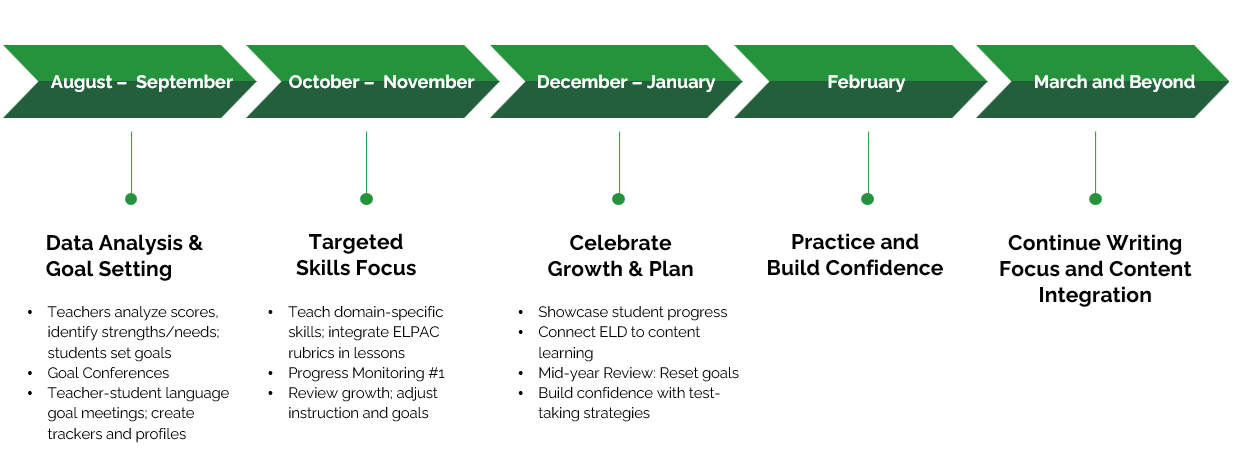
How would assessment preparation look on a timeline? Here is a sample timeline from one of our district partners:
August–September: Data Analysis and Targeted Skills Focus
- Analyze student data from previous assessments
- Set individual goals with students
- Begin targeted skills instruction
- Focus on helping students understand how ELD skills transfer to content areas
During this phase, teachers should help students understand that reading comprehension strategies, academic writing skills, and vocabulary development aren't just for passing tests—they're the same skills needed for success in science, social studies, and other content area classes.
October-November: Review Growth Plans and Focus on Writing Development
- Revisit and revise growth plans
- Intensify focus on academic writing
- Collaborate with content area teachers
- Help students see connections between ELD instruction and their coursework
When students start seeing their ELD instruction carry over into content area coursework, they begin to understand the connection and become more motivated to develop these transferable skills.
December-January: Practice and Confidence Building
- Introduce practice in the format of the assessment
- Connect practice to year-long learning
- Emphasize that test preparation is a summary of skills already learned
- Build confidence through familiarity with format and expectations
Jan-May: Take Assessments with Confidence
- Students take assessments with a clear understanding of why each skill matters
- Teachers have laid the groundwork throughout the year
The annual summative assessment becomes a demonstration of growth, with results not being a surprise to anyone.
Starting Mid-Year? It's Not Too Late!
If you're reading this in January and haven't yet begun structured preparation for your state's summative assessment, don't panic. While year-long preparation is ideal, teachers who implement focused strategies even in the months leading up to testing can make a significant difference in student outcomes.
1
Review Student Data from Previous Year
Pull last year's ELPAC, ACCESS, or ELPA21 scores for each of your English learners. Look at:
- Overall proficiency scores
- Individual domain scores (listening, speaking, reading, writing)
- Which domains show the greatest need for growth
- Students who are close to reclassification
This data should tell you exactly where to focus your limited preparation time for maximum impact on the proficiency assessment.
2
Conference with Students to Review Scores and Set Goals
Set aside 10 minutes per student to review their previous year's assessment results. Help them understand:
- What their current proficiency level means
- Which language domains are their strengths
- Where they have the most opportunity for growth
- What proficiency level they're aiming to achieve this year
Anecdotal evidence shows that teachers who reminded students of their specific goals immediately before the summative assessment saw measurably better performance. When students are clear on what they're working toward and understand that the assessment measures real skills they've been developing, it becomes an intrinsic motivating factor rather than an intimidating hurdle.
3
Introduce Targeted Test Practice
While authentic language development should remain your primary focus, strategic test practice helps students understand assessment formats and expectations. Discuss the benefits of practice with your students:
- Practice reduces anxiety by familiarizing students with question types
- Understanding the format lessens confusion and distraction
- Targeted practice helps identify specific areas needing additional support
Practice resources are available for most of the summative assessments. While free resources exist, the Language Tree Online Performance Indicator practice tests provide more thorough practice across all four domains. Not only does this tool allow students to experience the rigor and format of the ELP assessments, but it also provides teachers with actionable data on where additional instruction is needed. Teachers can walk the students through possible test question types and anchor exemplars that clearly demonstrate the expectations.
4
Final Review
In the days leading up to your state's summative assessment, revisit those individual goals you set with students. Remind them:
- Their target proficiency level for this year
- The specific skills they've been working on
- How much growth they've already demonstrated
- That this assessment is their opportunity to show what they know
This final motivation “push” can make a meaningful difference in student performance on summative proficiency assessments.
Final Thoughts
Assessment preparation should never be about “teaching to a test”. It's about equipping multilingual learners with the academic language skills they need to succeed in school and beyond.
When teachers begin early with transparent conversations about assessment goals, set individual student targets, and provide strategic practice aligned to the format and expectations of ELPAC or ACCESS, they're not teaching to a test—they're building authentic academic language proficiency. Students who understand what's being measured, why it matters, and how to demonstrate their growing skills approach assessments with confidence rather than anxiety.
The end goal isn't just a language proficiency score; rather, it's preparing students to be confident, capable academic readers, writers, speakers, and thinkers who can navigate any educational or professional environment they choose to pursue.
About Language Tree Online
Want to learn more strategies for supporting English learners? Explore the Language Tree Online resources for standards-aligned ELD curriculum and professional development designed specifically for secondary multilingual learners.